
Personalized insight
Artists’ Guide to Documenting and Archiving Your Work
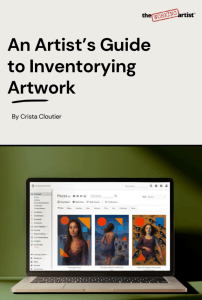
Most artists spend years — sometimes decades — building a body of work. Then they leave almost no record of it.
Here is what the research actually shows: the posthumous reputations of artists are directly linked to two things — surviving examples of their work, and thorough documentation of it.
The artists history remembers are largely the artists who kept good records.
And yet. Sixty-one percent of professional visual artists over 62 have made no plans for their work after death. Ninety-five percent have not archived their work.
One in five have no documentation at all.
Without titles, dates, materials, provenance — work that exists without context is nearly impossible to place, sell, donate, or exhibit after you are gone. Without a plan, without even a signed date on the back of a canvas, the most likely destination for your life’s work is a
dumpster. That is not dramatic. That is what happens.
This is not about being morbid. A 35-year-old artist has just as much reason to document their work as a 70-year-old. The archive you build now is also a living resource — for grant applications, artist statements, exhibition proposals. It is not paperwork. It is professional practice.
I’ve collaborated with Artwork Archive to create a free guide to help you build your archive — one that is clear, consistent, and accessible to someone other than you. Your work took
years to make. The archive you build around it might take an afternoon a month.
You write the rules of your career. Write this one in early.
(Note: I receive a small commission should you decide to work with Artwork Archive.)
Written by Crista Cloutier, artist mentor + founder of The Working Artist. (learn more about Crista here)