Personalized insight
Art Marketing Isn’t What You Think
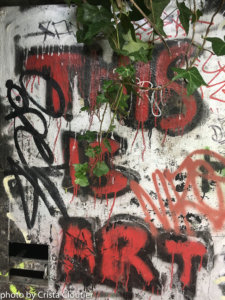
For many artists, the words art marketing produce an almost immediate tightening in the body. Do you feel it too?
Marketing can feel loud. Pushy. Artificial. Like turning something intimate and meaningful into a product.
But good art marketing isn’t about shouting louder or persuading strangers to buy something they don’t want.
It’s about helping people enter the world of your work.
And that begins with what I call your Golden Thread.
Your Golden Thread is the idea, question, longing, or fascination that runs through everything you create. It may appear across different subjects, styles, or mediums, but something underneath remains unmistakably yours.
It’s what you return to again and again.
It’s what you could talk about all day.
It’s what people respond to — even when they don’t yet have the words for it.
Some people might call this your “brand.” But I know that word can make artists feel as though they’re being asked to package themselves into something tidy and marketable.
Your golden thread isn’t something you manufacture.
It’s something you notice.
Once you recognize it, marketing becomes much less mysterious. Your website, newsletters, social media, exhibition materials, and conversations all begin to say the same thing:
This is what I care about. This is how I see the world. Come closer.
That is the heart of art marketing.
Your presentation matters too
Of course, your presentation matters too. You need strong photographs of your work. You need an artist statement, biography, and CV that are current and professionally presented. You need a simple website that allows people to experience your work without distraction.
These things aren’t administrative clutter. They make it easier for someone to take the next step with you.
Opportunities often arrive unexpectedly. A curator asks for images. A collector wants to see more. A gallery requests your biography. Being prepared allows you to say yes without scrambling — or apologizing.
Then there’s social media
Social media can help people discover you, but posting a photograph of your latest work and waiting for someone to buy it is not a marketing strategy. And when nothing happens, it’s easy to conclude that your work — or you — has somehow failed.
You haven’t failed.
You’ve simply asked one post to do too much.
Social media is most powerful when you use it to build familiarity and relationship. Share what you’re exploring. Reveal something about your process. Tell the story behind a piece. Introduce the questions that animate your work. Support other artists and participate in the larger conversation.
Your role is not to constantly perform or sell.
Your role is to offer people meaningful ways to come closer.
But remember: your social-media audience is borrowed. Algorithms change. Platforms disappear. You don’t control who sees what you share.
That’s why your website and mailing list remain so important.
Relationships, not reach
Your website is your creative home. It doesn’t need to be enormous or elaborate. In fact, simpler is often better. It needs to present your work beautifully, communicate who you are, and give visitors an easy way to remain connected.
Your mailing list is where those connections can deepen.
The people on your list may include collectors, curators, fellow artists, friends, former colleagues, people who attended an exhibition years ago, and people who simply feel something when they encounter your work.
Not everyone will buy from you. That does not make them unimportant.
They may recommend you, invite you, introduce you, remember you, or share your work with precisely the person who needs to see it.
And this is why relationships — not reach — are the real foundation of art marketing.
Go to openings. Attend events. Support other artists. Follow up with people. Become part of your arts community. Be interested, generous, and present.
Other artists are not your competition. They are your colleagues. Very often, they will become the source of your richest opportunities, introductions, encouragement, and growth.
You can experiment with art fairs, open studios, talks, videos, collaborations, newsletters, podcasts, or pop-up exhibitions. But you don’t have to do all of them.
Choose the forms of visibility that feel sustainable and alive for you.
Because the best art marketing doesn’t ask you to become someone else. It asks you to become more legible as yourself.
Make strong work.
Understand what runs through it.
Present it professionally.
Invite people closer.
Then keep nurturing the relationships that grow around it.
That isn’t selling out.
That is allowing your work to travel beyond the studio — and giving it the chance to find the people it was made to meet.
Written by Crista Cloutier, artist mentor + founder of The Working Artist. (learn more about Crista here)