Personalized insight
How to Write Your Artist Biography
A few days ago, I asked you to claim your identity as an artist.
Today, I’m asking you to document it.
Because once you claim it, you have to be able to say it out loud on paper.
Your artist biography is one of the most important marketing tools you’ll ever create. It’s your calling card, your introduction, the story that helps people understand who you are and why your work matters.
And yet, most artists either don’t have one… or they have one that makes them cringe.
Let me help you fix that.
First, let’s be clear about what a bio is not:
It’s not an artist statement. That’s about your work—your ideas, your process, your vision.
We’ll get to that later.
Your bio is about you—your path, your experience, your credentials as a creative professional.
Here’s the structure that works:
Paragraph One: Your present.
Who are you now? What do you create? Where are you based? What’s your current focus or practice?
Example:
“Jane Smith is a contemporary painter based in Portland, Oregon, working primarily in acrylics to explore themes of memory and landscape.”
Paragraph Two (optional): Your past.
What’s relevant from your journey? Education, exhibitions, collections, publications, awards, mentors, residencies, programs?
You don’t need a fancy MFA or museum shows to write this paragraph. Include what you have:
- Online courses or workshops you’ve completed
- Group shows, even local or online
- Juried exhibitions or competitions
- Residencies or artist programs
- Publications or features (yes, blogs count)
- Professional organizations or memberships
Example:
“Smith received her BFA from the Pacific Northwest College of Art and has exhibited in galleries throughout Oregon and Washington. Her work has been featured in American Art Collector and is held in private collections internationally.”
If you’re just starting? You were born. That’s enough.
Tell us where you’re from, what drew you to art, and what you’re exploring now.
Example:
“Originally from rural Montana, Smith has been making art since childhood. She recently completed an intensive workshop in abstract painting and is building a body of work inspired by the high desert landscapes of her youth.”
Keep it simple:
- Write in third person (“Jane Smith is…” not “I am…”)
- One paragraph minimum, two maximum
- Clear, straightforward sentences
- No jargon
- Update it as you grow
Your bio should answer:
- Who are you?
- What do you make?
- Where have you shown or studied?
- What makes you credible?
That’s it. You’re not writing your memoir. You’re giving people the information they need to take you seriously as a professional.
The biggest mistake I see?
Artists comparing themselves to others and deciding they’re “not ready” to have a bio.
Wrong.
If you’re making work and showing it to anyone—even on Instagram—you need a bio. It’s how the world knows who you are.
══════════════════
Your assignment:
Write or update your artist bio this week.
One to two paragraphs.
Clear, factual, professional.
══════════════════
Don’t overthink it. Just document who you are right now, today, as an artist.
Want help crafting not just your bio, but your entire professional foundation—your artist statement, your pricing strategy, your presentation materials, and the confidence to use them all?
That’s exactly what we do in The Working Artist Academy 2026.
The groundbreaking 12-week program begins January 15th. Enrollment is open now, with limited spaces to ensure personal guidance for every artist.
Join in 2025 and receive my Art. Money. Momentum. 2026 report as a bonus.
Learn more and enroll here: https://learning.theworkingartist.com/twa-academy-page/
Start with your bio.
Then let’s build the rest together.
🌙 Crista
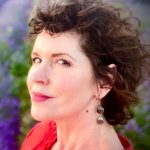
Written by Crista Cloutier, artist mentor + founder of The Working Artist. (learn more about Crista here)